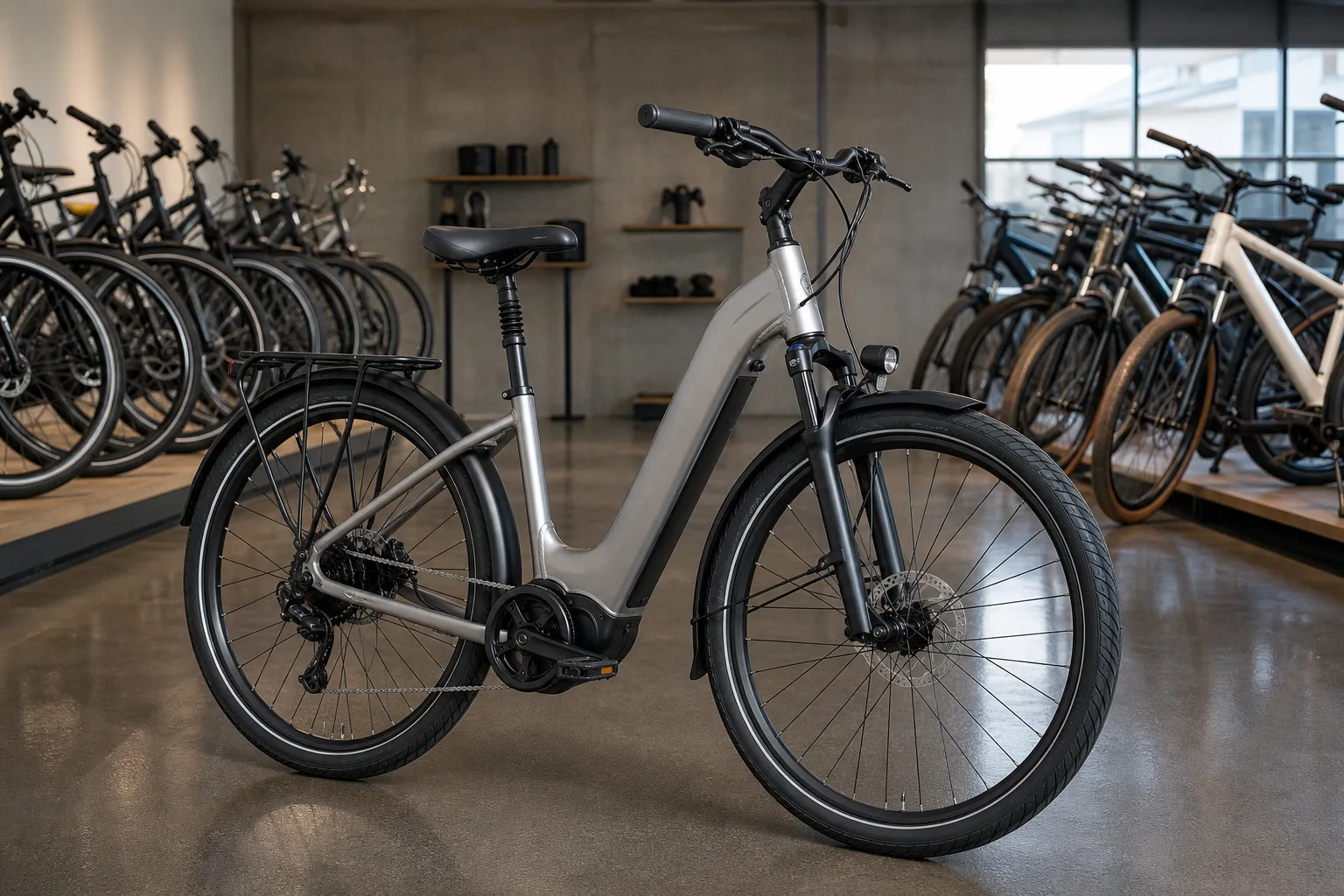
A rider with a resurfaced right hip came into a shop in October with a printout of three step-through models, each listing standover height to the tenth of an inch, and she had already ruled out the lowest of the three because a forum post said it ran short in the seat tube. On the floor, with a tape measure held vertical from the tile to the top of the tube at its lowest point, the numbers on the printout turned out to describe a place on the frame she would never put her leg. The bike she had eliminated cleared her by almost two inches. The one she had driven forty minutes to see did not.
Standover is a published number that answers a different question
Standover height, as catalogs use it, is measured at a fixed point along the top tube, usually where the rider would straddle the bike while sitting on the saddle nose or standing just ahead of it. On a diamond frame that point is close to the highest part of the tube, which is why the figure is conservative and useful. On a step-through, the tube slopes or drops sharply, so the published point can sit six or eight inches behind the lowest part of the arc, and the number stops describing the swing a rider actually makes. It is not wrong. It is answering a question about straddling, not about mounting.
The lowest point of the tube is the number nobody prints
What matters for a stiff hip or a knee that will not flex past a certain angle is the vertical distance from the ground to the top of the frame at its single lowest point, measured with the bike upright and the tires at riding pressure. Take the tape from the floor, not from the axle, and take it with the wheels the bike will actually ship with, because a 27.5 wheel and a 26 wheel under the same frame change that figure by more than an inch. Write it down for each candidate. That one column, gathered in the shop, sorts the field faster than any spec sheet.
Saddle height range, and the number hidden between the two published ones
Manufacturers usually publish a minimum and maximum saddle height, or a recommended rider height range that stands in for it, and both are honest as far as they go. Neither tells you where the seatpost minimum insertion line falls, which is what actually caps the low end, or whether the frame's seat tube is long enough that a shorter rider hits the stop before the saddle comes down far enough. Measure from the floor to the top of the saddle at the lowest setting the post allows with its insertion mark buried, then at the highest. A rider who needs the leg nearly straight at the bottom of the stroke to spare a knee wants headroom at the top of that range, not just at the bottom.
Crank length is the small number with the largest effect on a bad knee
Crank length is published on most electric models and on fewer pedal-only ones, and it is quietly the variable that decides how far a knee has to fold at the top of the pedal stroke. Going from 175mm to 165mm takes twenty millimeters out of the total travel of the foot and pulls the knee's peak flexion back by a meaningful amount, which for a replaced or arthritic joint can be the difference between a comfortable errand and a sore evening. Cranks are replaceable, unlike frame geometry, so a bike that fails on crank length alone is still a candidate. Ask the shop what a swap costs before ruling anything out.
How the four numbers rank against each other
Step-over height at the lowest point is the one that cannot be fixed, and it should govern the shortlist. Saddle height range is partly fixable, with a shorter or longer post, a different saddle, or a setback change, so it belongs second. Crank length is fully fixable and belongs last. Published standover belongs in the file as context and nothing more. The Consumer Product Safety Commission oversees bicycle construction requirements in the United States, which is why frames are consistently built and labeled, but no regulator standardizes how a catalog picks its measuring point.
Bring the tape, take the four readings on every bike you seriously consider, and keep the sheet. A rider who arrives at the second shop with real numbers from the first is comparing bikes rather than comparing marketing copy, and the decision usually makes itself.